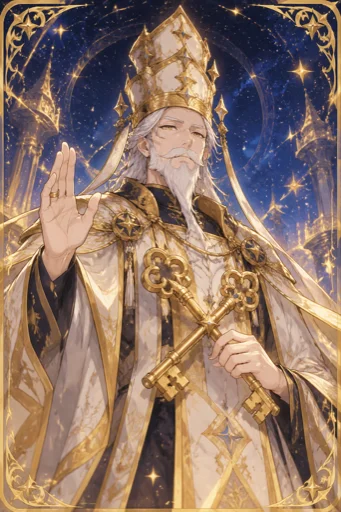
The Hierophant Tarot Meaning
Major Arcana V · tradition
As of November 2026, The Hierophant (V) is read as tradition and shared ritual — in Moonveil's free nightly draws he is the sixth of 22 Major Arcana cards, appearing for questions of teaching, lineage, and belief.
The Hierophant upright
The Hierophant sits in an institutional robe, hand raised in blessing, two keys at his feet. He is the deck's teacher: keeper of the lineage, the method, the ritual that worked before you arrived.
He appears when the situation has an established path — a training, a tradition, a mentor who has walked it. Borrow wisdom from someone who has walked this path.
Keywords: tradition, teaching, shared ritual · Counsel: borrow wisdom from someone who has walked this path.
The Hierophant reversed
Reversed, the tradition is being followed without examination — dogma, inherited belief, 'how it has always been done' used as a full argument.
The correction is respectful: keep the lineage, question the application. Some rules are load-bearing; find out which before renovating.
Reversed keywords: dogma, inherited belief unexamined.
The Hierophant in love and career
Love · The Hierophant blesses the formal steps: meeting families, defining the relationship, the ceremony of it. Reversed, question whether the form fits the two of you or just everyone's expectations.
Career · Certifications, apprenticeships, joining the institution — or founding one of your own. Reversed: the credential is outdated for where the field actually is.
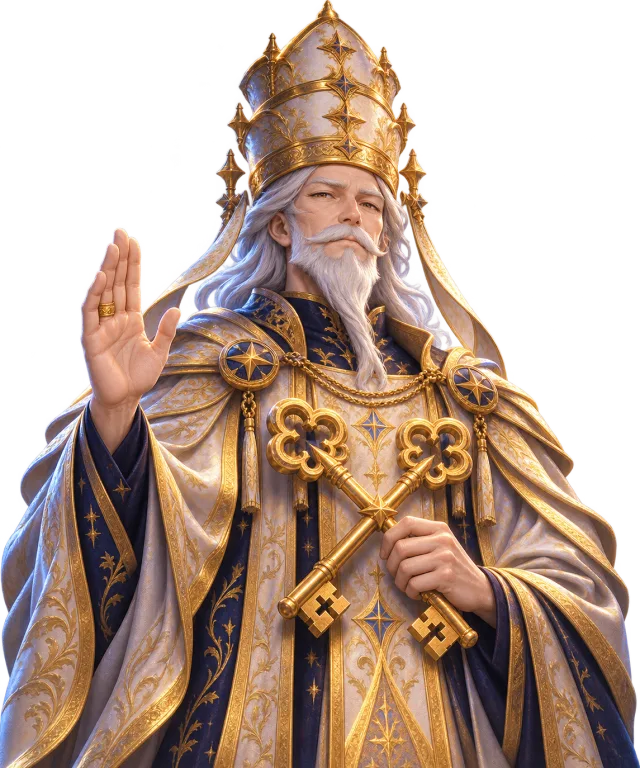
On a first quarter night The Hierophant recommends the established move: when the path forks, take the branch with a map. Read more in First Quarter Moon Tarot.
FAQ
What does The Hierophant tarot card mean?
The Hierophant (V) means tradition, teaching, and shared ritual — following an established path or learning from someone who has walked it. Reversed, he flags dogma and inherited beliefs that deserve examination.
What does The Hierophant mean in love readings?
In love readings he points to formal commitment — defining the relationship, meeting families, ceremonies. Reversed, he asks whether the conventional shape of the relationship actually fits the two people in it.